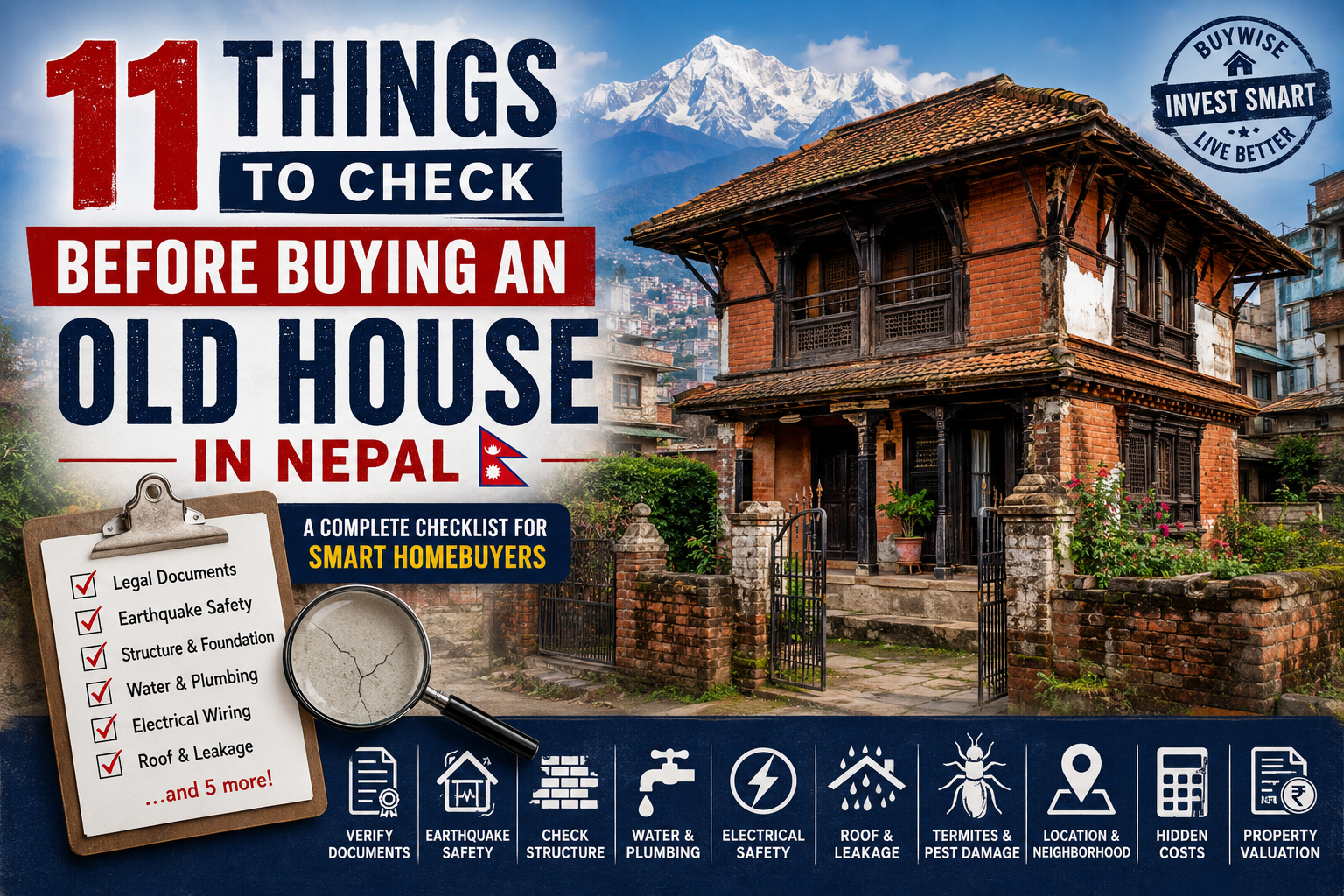
Buying an old house in Nepal can be a great decision. Older homes are usually more affordable, located in established neighborhoods, and often have a charm that newer buildings don’t. But at the same time, they can come with hidden problems from earthquake damage and weak construction to legal disputes and plumbing issues.
Before investing your hard-earned money, it’s important to inspect the property carefully. A little caution now can save you from major expenses and stress later. Here’s a practical checklist every homebuyer in Nepal should go through before buying an old house.
1. Verify the Legal Documents Properly
The very first thing you should check is the Lalpurja (land ownership certificate). This document confirms who legally owns the property and whether there are any loans, disputes, or restrictions attached to it. Don’t just trust photocopies shown by the seller. Visit the local Malpot Karyalaya (Land Revenue Office) and verify everything yourself.
Things to confirm:
-
The seller’s name matches the Lalpurja
-
Land size and location are accurate
-
No bank loan or legal “Roka” is attached
-
Property taxes have been cleared
-
Building completion certificate (Nirman Sampanna) is available
-
If someone else is selling on behalf of the owner, ask for a notarized Power of Attorney
Hiring a property lawyer may cost some money upfront, but it can protect you from serious legal trouble later.
2. Check Earthquake Safety
Nepal is highly earthquake-prone, and the 2015 earthquake exposed weaknesses in many older buildings. If the house was built before modern building codes were introduced, inspect it very carefully.
Pay attention to:
-
Column size (12x12 inch columns are safer by today’s standards)
-
Visible wall cracks, especially diagonal cracks
-
RCC frame quality
-
Whether the house was repaired after the 2015 earthquake
-
Availability of engineering drawings or construction plans
If the seller cannot provide proper construction details, it’s wise to hire a structural engineer for inspection.
3. Inspect the Foundation and Overall Structure
A house may look beautiful from the outside but still have major structural problems underneath.
Walk through every room slowly and look for warning signs such as:
-
Large cracks near doors and windows
-
Uneven floors
-
Weak staircases
-
Doors or windows that don’t close properly
-
Low-quality construction materials
If the house has wooden doors or cabinets, check the type of wood used. Nepali Saal and Seesam are durable, while cheaper wood often gets damaged quickly in Nepal’s humid climate. A civil engineer can identify hidden problems that regular buyers usually miss.
4. Check Water Supply and Plumbing
Water problems are common in many parts of Nepal, especially in Kathmandu Valley. An old house may have rusty pipes, leakage issues, or poor water pressure.
Things to inspect:
-
Water pressure in taps and bathrooms
-
Underground and overhead water tanks
-
Pipe leakage or rust
-
Drainage systems
-
Source of water supply (KUKL, boring water, tanker, etc.)
-
Unpaid water bills
Also check if drains overflow during monsoon season. Poor drainage can create long-term problems.
5. Inspect Electrical Wiring
Older houses were not designed for modern electricity usage. Today’s appliances like ACs, geysers, inverters, and microwaves put much more pressure on wiring systems.
Look for:
-
Old or damaged wiring
-
Burn marks near switchboards
-
Unsafe “jugaad” connections
-
Proper grounding/earthing system
-
Legal NEA meter connection
-
Enough load capacity for modern appliances
Faulty wiring is a serious fire hazard, so it’s worth having an electrician inspect the property.
6. Check the Roof and Leakage Problems
Monsoon rain can quickly expose weaknesses in old houses.
Roof leakage may lead to:
-
Damp walls
-
Mold growth
-
Weak plaster
-
Rotting wooden structures
While inspecting the house, look for:
-
Water stains on ceilings
-
Cracks on rooftops
-
Moss or algae growth
-
Bathroom seepage
-
Poor rooftop drainage slope
-
Gaps around windows
If possible, visit the property during rainy weather to spot hidden leakage issues.
7. Look for Termites and Pest Damage
Termites are one of the biggest hidden threats in older Nepali homes.
They quietly damage:
-
Wooden doors
-
Window frames
-
Cabinets
-
Flooring
-
Structural timber
Warning signs include:
-
Powder-like sawdust near wood
-
Hollow sounds when tapping wooden surfaces
-
Mud trails along walls
-
Cockroach or rodent activity
Professional termite treatment can be expensive, so it’s better to identify the problem before buying.
8. Understand the Location Risks
Location matters just as much as the house itself.
Some areas in Nepal face:
-
Flooding during monsoon
-
Landslide risks
-
Soil erosion
-
Poor drainage
Before buying:
-
Ask locals about flooding history
-
Check if the land is near rivers or canals
-
Inspect slopes and surrounding terrain
-
Verify disaster-risk classification from local authorities
-
Ensure the property is not in a floodplain area
A cheap property in a risky location may become a costly mistake later.
9. Evaluate the Neighborhood and Accessibility
A good neighborhood can greatly improve your quality of life and future resale value.
Spend time around the area and check:
-
Road access to the house
-
Distance to schools, hospitals, and markets
-
Traffic and noise levels
-
Air quality
-
Ongoing construction nearby
-
Relationship between neighbors
Talking to local residents often reveals issues that sellers may not mention.
10. Calculate the Hidden Costs
The purchase price is not the only expense involved when buying a house in Nepal.
You should also budget for:
-
Property registration tax
-
Lawyer fees
-
Broker commission
-
Inspection costs
-
Utility bill clearance
-
Repairs and renovations
Old houses often require rewiring, repainting, plumbing upgrades, or waterproofing work. Keeping an extra 15–20% budget for unexpected expenses is always a smart idea.
11. Get an Independent Property Valuation
Property prices in Nepal are often negotiable, and many sellers quote prices much higher than actual market value.
Before finalizing the deal:
-
Compare nearby property prices
-
Consult local real estate agents
-
Check municipality valuation rates
-
Review bank valuation reports if taking a loan
-
Factor in repair costs and building age
Never hesitate to negotiate. Any issue you discover during inspection can help lower the price.
Final Thoughts
Buying an old house in Nepal can be a fantastic investment if you do your homework properly. A well-built older home in a good neighborhood can offer excellent value, more space, and better surroundings than many new constructions.
But don’t rush the process.
Always:
-
Verify documents carefully
-
Hire professionals when needed
-
Inspect the house thoroughly
-
Ask questions
-
Be ready to walk away if something feels wrong
A careful buyer today becomes a happy homeowner tomorrow.