Have a project for us?
DO YOU HAVE ANY QUESTIONS REGARDING YOUR NEXT CONSTRUCTION PROJECT?
Published on: May 18, 2026
That's exactly what this guide is here to answer.
Adding a room to an existing house in Nepal in 2026 is one of the most practical home improvement decisions you can make. It's almost always cheaper than buying a new property, and it lets you expand without the trauma of relocating. But it comes with its own set of complications structural concerns, permits, material costs, labor availability and if you go in blind, the budget surprises can be brutal.
We've pulled together current market data, real contractor insights, and advice from GharDurbar's team of engineers to give you a genuinely useful picture of what room addition costs look like in Nepal today.
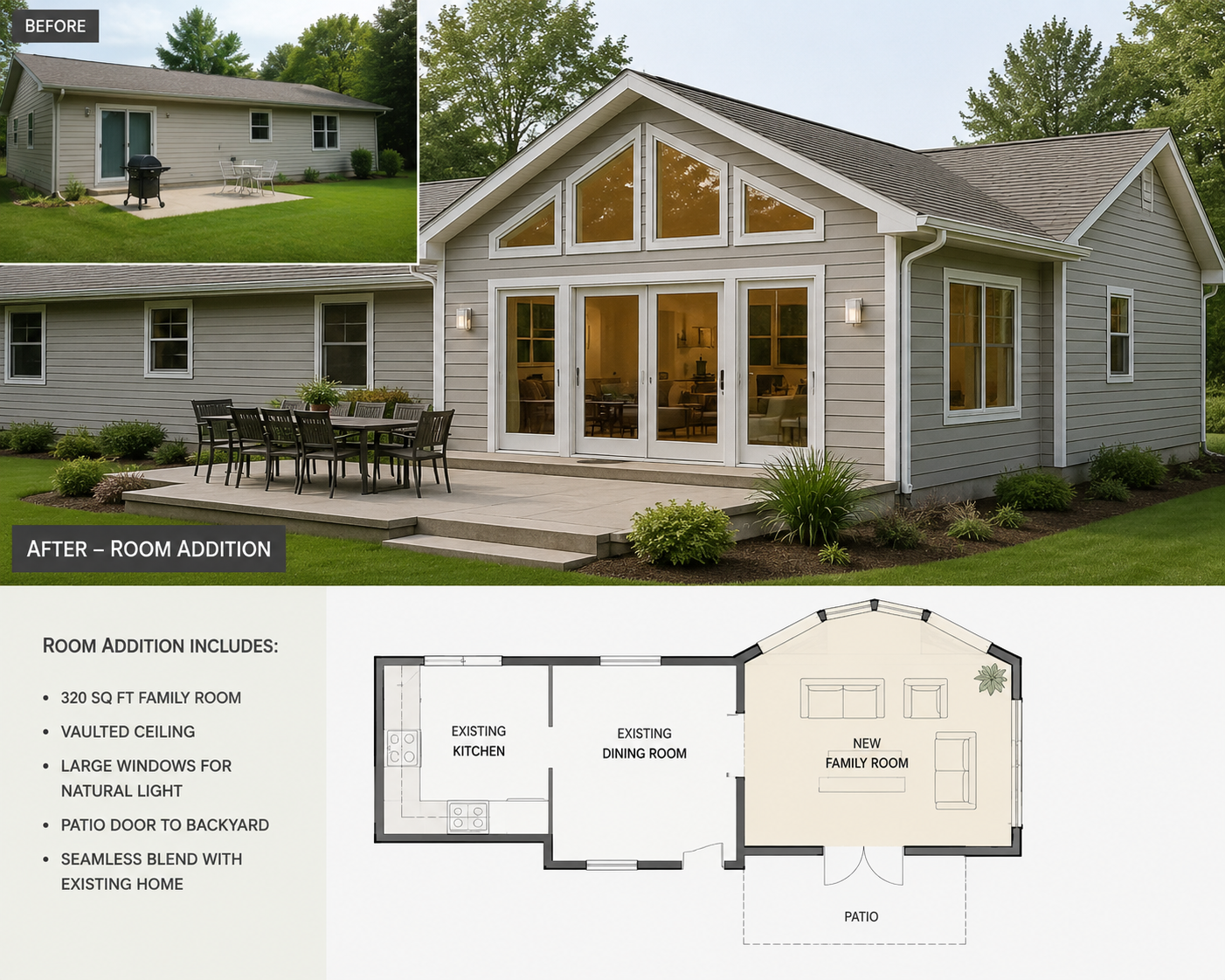
A room addition means constructing a new room or multiple rooms onto your existing structure. This is different from interior renovation (changing what's already there) or a full new-build. In Nepal, room additions typically fall into a few categories:
Each of these has different cost implications, structural requirements, and permit processes. But across all of them, the fundamental cost drivers are the same: materials, labor, design complexity, your location, and what the municipality asks of you.
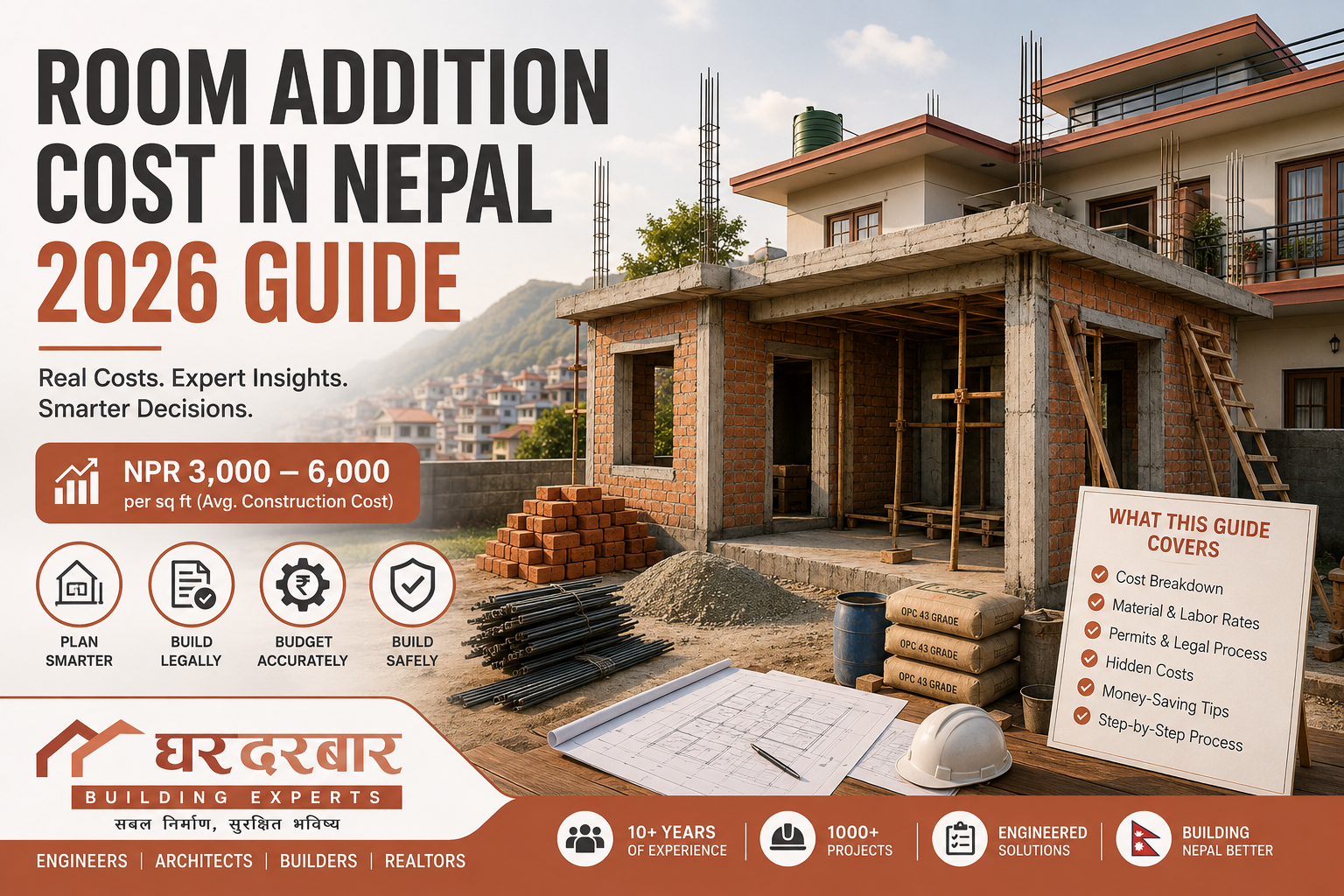
Let's get straight to the numbers. Construction costs in Nepal in 2026 generally range from NPR 3,000 to NPR 6,000 per square foot depending on quality of finish, location, and structural complexity.
For a room addition specifically, here's a practical breakdown:
| Type of Addition | Size (approx.) | Estimated Cost Range |
| Basic single room (economy finish) | 120–150 sq ft | NPR 3.6 – 9 Lakh |
| Standard bedroom with attached bath | 200–250 sq ft | NPR 8 – 15 Lakh |
| Mid-range room addition (Kathmandu) | 200–300 sq ft | NPR 12 – 18 Lakh |
| Premium room with high-end finishes | 250–300 sq ft | NPR 18 – 25 Lakh |
| New floor addition (full storey, 1,000 sq ft) | 1,000 sq ft | NPR 35 – 55 Lakh |
These figures cover civil structure, basic plumbing, electrical wiring, plastering, and standard finishes. They do not include structural reinforcement of existing building (if needed), permit fees, interior furniture, or landscaping.
Note: Material inflation in Nepal is currently running at 7–10% year-on-year in 2026. Getting your material quotes early and locking in prices for steel and cement before the post-monsoon price spike (October–November) can save you meaningful money.
Where you live in Nepal makes a significant difference to what you'll pay.
Adding upward (a new floor) is structurally more demanding than extending sideways and that affects cost directly.
Ground-floor horizontal extension: If your plot has space and your existing foundation doesn't need to carry extra weight, this is typically the simpler and cheaper route. The main costs are excavation, new foundation, walls, roofing, and finishes for the added area.
Vertical addition (new floor): This requires a structural assessment of your existing building first. Can your columns, beams, and foundation handle the additional load? In Nepal's seismic zone, this is not a question to take lightly. If your existing structure was designed with expansion in mind (which a good structural engineer would have planned for), costs are manageable. If not, you may need to reinforce columns and beams before you can go up and that adds significant cost.
Rooftop enclosure: Converting an open terrace into a room is popular in Nepali homes and can be more affordable than a full structural addition but it still needs proper engineering and municipal approval.
This is the cost that most homeowners don't see coming. Before adding any room that changes the load on your structure, a structural engineer needs to assess whether your existing RCC columns, beams, and slabs can handle it.
If reinforcement is needed, costs can range from NPR 1.5 Lakh to NPR 8+ Lakh depending on the extent of work. This is why getting a structural assessment done before you plan your budget is non-negotiable.
This is probably the single biggest cost variable after the structure itself. The difference between basic and premium finishes alone can add NPR 1,000–2,500 per square foot to your total bill.
Decide your finish level early and be disciplined about it. Scope creep in finishes is one of the top reasons room additions go 20–40% over budget.
A simple rectangular room is always cheaper to build. The moment you introduce non-standard ceiling heights, cantilevered elements, curved walls, or elaborate cornices, costs climb sometimes by NPR 200–500 per square foot for those features without adding proportionally to functional living space.
Keep it simple if budget is a constraint.
Materials account for roughly 50–65% of your total room addition budget. Here's what you're dealing with in current market conditions:
| Material | 2026 Rate |
| Cement (OPC 43/53 Grade) | NPR 800–950 per bag |
| TMT Steel bars (Fe500D) | NPR 88–120 per kg (at Kathmandu site, incl. VAT & transport) |
| Local bricks | NPR 14–18 per piece |
| River sand | NPR 28,000–35,000 per tipper |
| Ceramic tiles (basic) | NPR 45–80 per sq ft |
| Ceramic tiles (mid-range) | NPR 80–180 per sq ft |
A few important things to know about materials in 2026:
Steel: Always use TMT Fe500D grade bars this is now the recommended standard under Nepal Building Code (NBC 105:2020). Ex-factory prices look lower, but by the time steel arrives at your Kathmandu site with VAT and transport, you're typically paying 15–20% more. Always confirm whether your supplier quote is ex-factory or delivered-to-site.
Cement: Use OPC Grade 43 or 53 for all structural elements. PPC cement is a fine, cost-effective option for non-structural work like plastering you can save NPR 100–200 per bag there without compromising quality.
Bricks: Demand in Kathmandu Valley is up 22% compared to last year, and a 10% tax on non-eco bricks is now in effect. Plan and order early to avoid shortages.
Labor accounts for 25–35% of your total construction budget. Nepal's official minimum wage was revised upward by 13% to NPR 19,550 per month effective July 2025 and field rates in construction are higher, especially for skilled trades.
| Worker Type | Daily Rate (Kathmandu, 2026) |
| Skilled mason | NPR 900–1,200 per day |
| General laborer (unskilled) | NPR 600–800 per day |
| Carpenter | NPR 1,000–1,500 per day |
| Electrician/Plumber (skilled) | NPR 1,200–1,800 per day |
One thing worth understanding about Nepal's labor market right now: skilled construction workers are increasingly hard to find. Foreign migration has tightened the supply significantly. This means two things rates have gone up, and the quality gap between a good mason and a cheap one is wider than ever.
Our advice: Don't optimize for the cheapest labor. A skilled mason who follows the structural drawing will cost more per day but far less in total, because you won't be paying for rework, remediation, or structural fixes later.
One of the biggest mistakes homeowners in Nepal make is starting construction before getting the paperwork sorted. We get it the permit process feels slow and bureaucratic. But the consequences of building without approval are serious: municipalities can order demolition, banks won't accept unpermitted structures as loan collateral, and you'll face legal headaches when you eventually want to sell.
Here's what you need for a room addition in Nepal:
Naksha Pass (Building Permit): The official building permit from your local Nagarpalika or Gaunpalika. You need:
Naksha Pass fees typically range from NPR 10–80 per square foot. In Kathmandu Metropolitan City, fees for larger additions can exceed NPR 80,000.
Soil Testing: If your addition involves new foundation work, a soil test is not optional. Cost: NPR 15,000–40,000. This is the document that tells your structural engineer what kind of foundation to design getting this wrong means foundation repairs that cost several lakhs, if the structure survives at all.
NBC 105:2020 Compliance: Nepal's building code, updated in November 2025, governs all residential construction. Earthquake-resistant construction under the code adds 10–20% to structural costs. This is the legal minimum not an optional upgrade.
Here's how the process typically unfolds when done correctly:
Step 1 — Structural Assessment Before anything else, have a licensed structural engineer assess your existing building. Can it handle the addition? What reinforcement, if any, is needed? This assessment costs NPR 15,000–50,000 and is worth every paisa.
Step 2 — Design and Architecture Engage an architect to design the addition in compliance with local zoning rules (setback distances, FAR, height limits). The architect's fee is typically 2–5% of total construction cost an investment that consistently pays for itself by preventing costly redesigns.
Step 3 — Get Your Permits Submit your drawings and documentation to the local municipality for Naksha Pass approval. In Kathmandu, many municipalities now process applications through the Electronic Building Permit System (EBPS). Don't start construction before this is approved.
Step 4 — Prepare Your BOQ A detailed Bill of Quantities (BOQ) listing every material, quantity, and unit rate is your most powerful tool against budget overruns. Don't sign a contractor agreement without one.
Step 5 — Construction The best construction season in Nepal is October to February post-monsoon, when soil is stable, materials are accessible, and quality control is easier. Avoid construction during the monsoon (June–September) if at all possible.
Step 6 — Final Inspection and Completion Certificate Once construction is done, your local municipality inspects and compares the completed addition against the approved drawings. If everything matches, they issue the Completion Certificate (Sampanna Praman Patra). This document is essential without it, you can't use the property as loan collateral and will face complications when selling.
Over 70% of construction projects in Nepal exceed their initial budget by 20–40%. Here are the costs that routinely surprise people — so you can plan for them upfront:
Smart budgeting isn't about buying the cheapest materials it's about making informed decisions before and during construction.
Lock in material prices early.
Steel and cement prices spike during the post-monsoon construction rush (October–November). Ordering before that window can meaningfully protect your budget.
Keep the layout simple.
A rectangular room with standard ceiling heights is significantly cheaper than one with curves, cantilevers, or non-standard dimensions. Save the design ambitions for the interior.
Buy materials in bulk.
Steel and cement purchased in bulk at wholesale prices can save 10–15% compared to frequent small purchases.
Use quality local alternatives.
High-quality Nepali tiles and stone often compete with imported options in durability and look, at a fraction of the price. Aluminum windows are approximately 30% cheaper than UPVC and for a single room addition in Kathmandu's climate, good aluminum works fine.
Finalize your design before breaking ground.
Design changes mid-construction are one of the leading causes of budget overruns in Nepal. Decide everything layout, finishes, fixtures before the first brick is laid.
Hire a contractor, not just day laborers.
Self-managing labor sounds like a money-saver but usually isn't for anything beyond a very simple single-room addition. Material waste, theft, and coordination inefficiency typically cost more than a professional contractor's margin.
This is a question worth asking honestly before committing.
Room addition makes strong financial sense when:
A new property or complete rebuild might make more sense when:
If you're unsure, GharDurbar's team of engineers can assess your specific situation and give you an honest recommendation.
| Category | Detail |
| Basic construction rate | NPR 3,000–3,500 per sq ft |
| Standard construction rate | NPR 4,000–5,500 per sq ft |
| Premium construction rate | NPR 6,000+ per sq ft |
| Typical single room addition | NPR 6–18 Lakh |
| Full floor addition (1,000 sq ft) | NPR 35–55 Lakh |
| Material share of budget | 50–65% |
| Labor share of budget | 25–35% |
| Permit fees (Naksha Pass) | NPR 10–80 per sq ft |
| Contingency buffer | 8–10% of total budget |
| Best construction season | October – February |
The cost of adding a single room in Nepal typically ranges from NPR 6 Lakh to NPR 18 Lakh depending on room size, finish quality, structural requirements, and location. A basic economy room may cost less, while a premium bedroom with attached bathroom and modern finishes can cost significantly more.
In most cases, adding a room is far more affordable than purchasing a new property, especially in cities like Kathmandu where land prices are extremely high. If your existing structure is strong enough for expansion, a room addition usually provides better value for money.
Yes. Any structural addition or extension requires approval from your local municipality or rural municipality. Building without a permit can result in fines, demolition notices, and legal complications when selling or refinancing the property later.
Possibly — but only after a structural engineer assesses your building. Nepal lies in a seismic zone, so your columns, beams, and foundation must be capable of handling the extra load safely before vertical expansion is approved.
A standard single-room addition generally takes around 2 to 4 months depending on weather conditions, permit approvals, labor availability, and project complexity. Full-floor additions may take significantly longer.
The ideal construction season is from October to February. Post-monsoon weather offers stable soil conditions, easier material transportation, and better overall construction quality. Monsoon construction is usually slower and more expensive.
Common hidden costs include structural reinforcement, soil testing, permit fees, waterproofing, utility extensions, architect and engineer fees, and price increases in steel or cement. Keeping an additional 8–10% contingency budget is highly recommended.
If the addition involves new foundations or structural work, yes. Soil testing helps engineers design a safe foundation system and avoid future settlement or structural problems.
Adding a room to your home is one of the most personal investments you'll make. It's not just about square footage it's about your family's comfort, your home's long-term value, and often, a significant chunk of your savings. The good news is that thousands of Nepali families successfully complete room additions every year, even as costs have risen. The difference between a smooth project and a stressful one almost always comes down to how carefully you planned before the first bag of cement was opened. Get the structural assessment done. Hire an architect who understands NBC requirements. Lock in your material prices early. And always always keep a contingency buffer.
At GharDurbar, our team of engineers, architects, and construction specialists has been guiding homeowners through exactly this process for over a decade. Whether you're in Kathmandu, Pokhara, or anywhere in Nepal, we can help you plan your room addition with realistic numbers, proper documentation, and the kind of oversight that prevents expensive surprises.
Have a room addition project in mind? Reach out to us via the GharDurbar Inquiry Form — we'll help you understand your options and build a budget that holds.
GharDurbar is a team of Engineers, Architects, Builders, and Realtors with more than 10 years of experience in building engineering, architectural design, construction project management, and building research in Nepal.
Disclaimer: All cost figures in this article reflect market rates as of 2026 and are provided as planning references. Actual costs vary based on your specific site, structure, design, and material choices. Always obtain a detailed BOQ from a licensed contractor before finalizing your budget.