How to Choose the Right Wood for Doors and Windows in Nepal’s Climate

Published on: May 21, 2026


How to Choose the Right Wood for Doors and Windows in Nepal’s Climate

When you build or renovate a home in Nepal, most people focus heavily on paint colors, flooring, kitchen design, or furniture. But one decision that quietly affects your home for decades is the wood you choose for your doors and windows. And in a country like Nepal, that decision matters even more.

From the humid monsoon of Kathmandu Valley to the hot Terai plains and the colder hill regions, Nepal’s climate can be tough on wood. Doors begin to swell during rainy months. Window frames crack during dry winters. Cheap wood bends, warps, or becomes a target for termites within a few years.

That’s why choosing the right wood is not just about appearance. It’s about durability, climate resistance, maintenance, and long-term value.

If you’ve ever wondered:

  • Which wood lasts longest in Nepal?
  • Is Sal wood better than Teak?
  • What wood should you use for windows?
  • Which wood works best during monsoon?
  • Is engineered wood worth it?

This guide will help you make the right decision before investing in doors and windows for your home.


Why Wood Selection Matters in Nepal

Nepal experiences highly varied weather conditions throughout the year:

  • Heavy monsoon humidity
  • Strong sunlight exposure
  • Cold winters in hilly areas
  • Dry air that causes shrinkage and cracking
  • Termite issues in many regions

Poor-quality or improperly seasoned wood struggles under these conditions. Over time, homeowners commonly face:

  • Swollen doors during rainy seasons
  • Window frames becoming loose
  • Cracks and splitting
  • Fungus and moisture damage
  • Termite infestation
  • Frequent repainting or polishing

Choosing the correct wood helps prevent these expensive repairs later.


Things to Consider Before Choosing Wood

Before selecting wood for your doors and windows, you should evaluate several important factors.

1. Climate Resistance

Nepal’s monsoon season creates high moisture levels. Wood must be able to resist swelling, warping, and fungal growth.

Hardwoods with dense grain structures generally perform better in humid environments.


2. Durability

Doors and windows are long-term investments. Good-quality wood can last decades with proper maintenance.

Durability becomes especially important for:

  • Main entrance doors
  • Exterior windows
  • Balcony doors
  • Sun-exposed areas

3. Termite Resistance

Certain areas of Nepal are highly prone to termites, especially warm and humid regions.

Naturally termite-resistant woods reduce future maintenance costs significantly.


4. Seasoning Quality

Even premium wood performs poorly if it is not properly seasoned.

Seasoning removes excess moisture from timber and stabilizes the wood. Improperly seasoned wood often bends or cracks after installation.

Always ask suppliers whether the timber is kiln-seasoned or naturally seasoned.


5. Budget

Different woods vary greatly in price.

Some are premium long-term investments, while others are affordable but require more maintenance.

The key is balancing:

  • Budget
  • Longevity
  • Appearance
  • Climate suitability

Best Woods for Doors and Windows in Nepal

Let’s look at the most commonly used woods in Nepal and where each performs best.


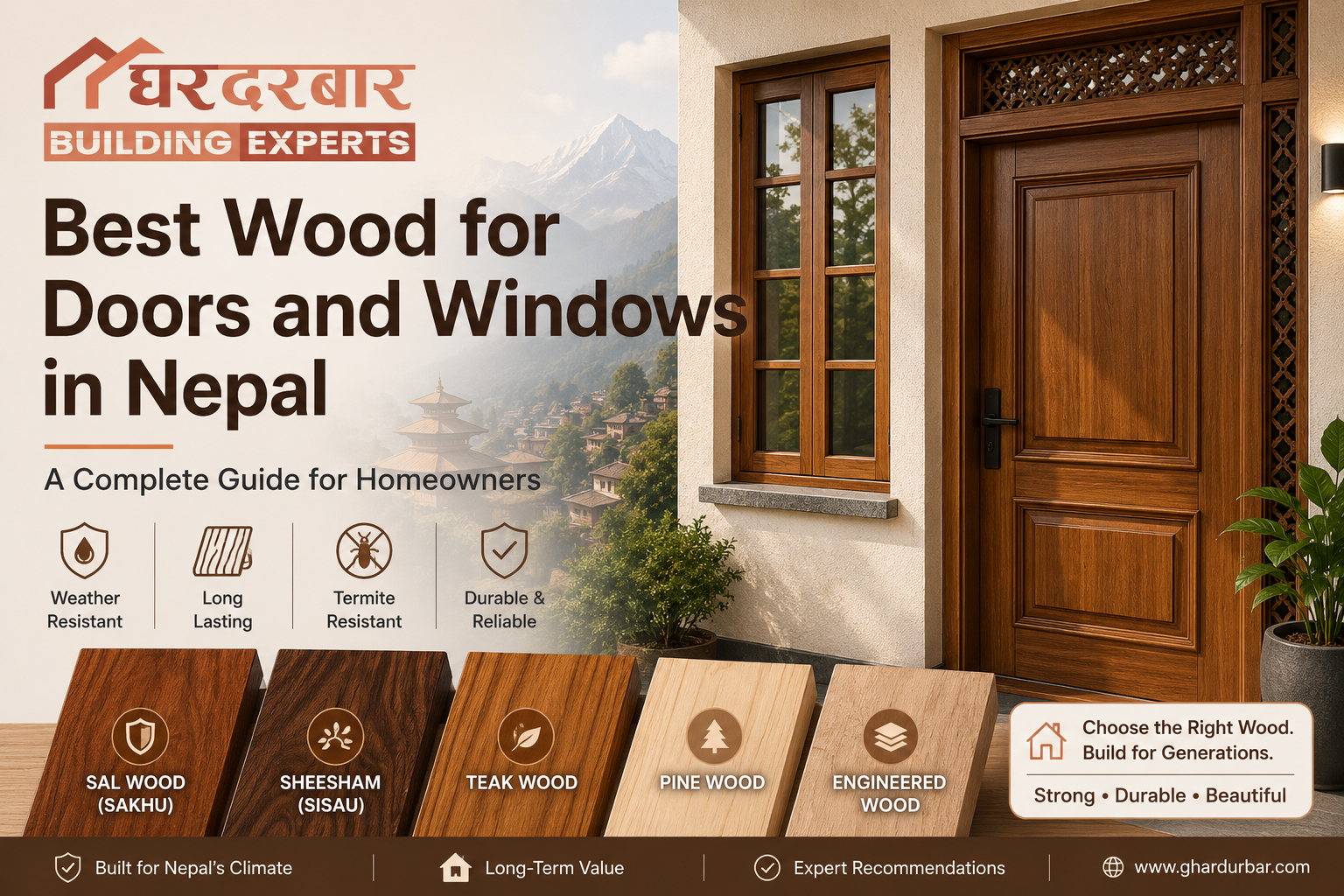
1. Sal Wood (Sakhu)

Best For:

  • Main doors
  • Exterior frames
  • Heavy-duty applications

Sal wood, locally known as Sakhu, is one of the most trusted hardwoods in Nepal.

It is extremely durable, dense, and naturally resistant to moisture and insects. Many traditional Nepali homes still have Sal doors that have lasted for decades.

Advantages of Sal Wood

  • Very strong and durable
  • Excellent moisture resistance
  • Good termite resistance
  • Long lifespan
  • Suitable for Nepal’s monsoon climate

Disadvantages

  • Heavy weight
  • More expensive than softer woods
  • Can be difficult to work with

Ideal Usage

If you want a strong, long-lasting front door that can withstand Nepal’s changing weather, Sal is one of the safest choices.


2. Sheesham / Sisau Wood

Best For:

  • Premium doors
  • Decorative wooden windows
  • Luxury interiors

Sheesham is highly valued for its beautiful grain pattern and premium appearance.

It combines strength with elegance, making it popular in high-end homes.

Advantages

  • Attractive natural texture
  • Strong and durable
  • Reasonably termite-resistant
  • Good lifespan

Disadvantages

  • Higher cost
  • Requires good polishing and maintenance
  • Can crack if improperly seasoned

Ideal Usage

Sheesham works exceptionally well for premium interior doors and stylish window frames where aesthetics matter.


3. Teak Wood

Best For:

  • Luxury homes
  • Moisture-prone areas
  • Exterior applications

Teak is globally famous for its resistance to water and weather damage.

Although expensive, it performs extremely well in humid climates.

Advantages

  • Excellent water resistance
  • Highly durable
  • Resistant to termites and decay
  • Minimal warping

Disadvantages

  • Very expensive
  • Limited availability
  • Higher installation cost

Ideal Usage

Teak is perfect for homes looking for premium long-term performance with minimal maintenance.


4. Pine Wood

Best For:

  • Interior doors
  • Budget-friendly projects
  • Modern interior designs

Pine is a softer wood commonly used in affordable interior applications.

It is lightweight and easier to work with compared to hardwoods.

Advantages

  • Affordable
  • Easy to install
  • Modern appearance
  • Lightweight

Disadvantages

  • Less durable
  • More vulnerable to moisture
  • Requires proper treatment
  • Lower termite resistance

Ideal Usage

Pine is better suited for indoor bedroom doors or decorative interior spaces rather than exterior exposure.


5. Engineered Wood


Best For:

  • Modern apartments
  • Budget renovations
  • Interior applications

Engineered wood products such as plywood, MDF, and HDF are becoming increasingly common in urban Nepal.

These materials are manufactured for stability and affordability.

Advantages

  • Budget-friendly
  • Smooth finish
  • Less natural warping
  • Easier customization

Disadvantages

  • Lower lifespan than hardwood
  • Sensitive to water if low quality
  • Limited structural strength

Ideal Usage

Engineered wood is suitable for interior doors in apartments or homes where cost-efficiency matters more than long-term natural durability.


Which Wood Is Best for Nepal’s Monsoon Climate?

For Nepal’s humid monsoon conditions, the best options are:

  1. Sal Wood
  2. Teak Wood
  3. Properly seasoned Sheesham

These woods handle moisture fluctuations much better than cheaper softwoods.

However, even the best wood can fail if:

  • It is not seasoned properly
  • Waterproof coating is ignored
  • Installation quality is poor

Best Wood for Main Doors

Your main entrance door faces:

  • Rain
  • Sunlight
  • Dust
  • Humidity
  • Frequent usage

Because of this, durability matters most.

Recommended Choices

Premium Option

  • Teak

Best Overall Value

  • Sal Wood

Stylish Premium Look

  • Sheesham

Best Wood for Windows

Windows are constantly exposed to sunlight and moisture, especially during monsoon.

For window frames, dimensional stability becomes extremely important.

Recommended Choices

  • Sal Wood
  • Teak
  • Treated hardwoods

If you use lower-quality wood for windows, you may experience:

  • Difficulty opening windows
  • Frame expansion
  • Water leakage
  • Cracks near joints

Common Mistakes Homeowners Make

1. Choosing Wood Based Only on Price

Cheap wood often leads to expensive repairs later.

Low-quality timber may look fine initially but deteriorates quickly in Nepal’s climate.


2. Ignoring Seasoning

Improperly seasoned wood is one of the biggest causes of warping and cracking.

Always confirm seasoning quality before purchase.


3. Skipping Protective Coatings

Wood requires proper:

  • Polish
  • Sealant
  • Waterproof coating
  • Anti-termite treatment

Without protection, even strong wood can suffer damage.


4. Using Interior Wood Outdoors

Some woods are suitable only for indoor environments.

Using softwood outdoors can lead to swelling and rapid deterioration.


How to Maintain Wooden Doors and Windows in Nepal

Proper maintenance significantly increases lifespan.

Maintenance Tips

Regular Polishing

Apply polish or protective coating every few years.

Prevent Water Exposure

Avoid direct rainwater accumulation near wooden frames.

Check for Termites

Inspect corners and lower sections regularly.

Repaint or Recoat When Needed

Cracked coatings allow moisture to enter the wood.

Ensure Proper Ventilation

Good airflow reduces moisture buildup indoors.


Should You Choose Solid Wood or Engineered Wood?

The answer depends on your priorities.

FeatureSolid WoodEngineered Wood
DurabilityExcellentModerate
AppearanceNatural premium lookModern finish
Moisture ResistanceBetterDepends on quality
CostHigherLower
LifespanLong-termMedium-term
MaintenanceModerateLower initially

If your budget allows, solid hardwood remains the best long-term investment for Nepal’s climate.


Final Recommendation for Nepalese Homes

If you want the best balance of durability, climate resistance, and long-term value:

Best Overall Choice

Sal Wood (Sakhu)

It performs exceptionally well in Nepal’s weather conditions and offers strong long-term durability.

Best Premium Choice

Teak Wood

Excellent for luxury homes and exterior applications.

Best Budget Choice

Engineered Wood or Pine for Interiors

Suitable for indoor applications where moisture exposure is limited.

FAQs

1. Which wood is best for doors and windows in Nepal?

For Nepal’s climate, Sal wood (Sakhu) is considered one of the best choices because of its durability, moisture resistance, and long lifespan. Teak is another premium option, while Sheesham works well for stylish interiors and premium finishes.

2. Is Sal wood better than Teak wood?

Both are excellent choices, but they serve slightly different needs. Sal wood is highly durable and cost-effective for Nepalese conditions, making it a popular practical choice. Teak offers superior water resistance and requires less maintenance, but it is significantly more expensive.

3. Which wood is most suitable for Nepal’s monsoon season?

Woods like Sal, Teak, and properly seasoned Sheesham perform best during Nepal’s humid monsoon season because they resist swelling, warping, and moisture damage better than softer woods.

4. What is the difference between solid wood and engineered wood?

Solid wood is natural timber known for its strength, durability, and premium appearance, while engineered wood is manufactured using wood fibers or layers for affordability and stability. Solid wood lasts longer, whereas engineered wood is more budget-friendly for interior use.

5. How can I make wooden doors and windows last longer in Nepal?

Proper maintenance is essential. Regular polishing, waterproof coatings, anti-termite treatment, and preventing prolonged water exposure can significantly increase the lifespan of wooden doors and windows in Nepal’s changing climate.


Final Thoughts

Choosing the right wood for doors and windows is not something homeowners should rush.

Nepal’s climate can be harsh on poor-quality materials, and the wrong choice may lead to swelling, cracking, termite damage, and costly repairs within just a few years.

The best approach is to think long-term.

A properly seasoned, high-quality wood may cost more initially, but it provides:

  • Better durability
  • Lower maintenance
  • Improved appearance
  • Greater property value
  • Better resistance to Nepal’s weather conditions

Whether you are building a new home, renovating an old property, or upgrading your interiors, investing in the right wood can make a massive difference in both performance and aesthetics.

For expert guidance on home construction materials, interiors, renovation ideas, and modern housing solutions in Nepal, visit GharDurbar.