Have a project for us?
DO YOU HAVE ANY QUESTIONS REGARDING YOUR NEXT CONSTRUCTION PROJECT?
Published on: May 19, 2026
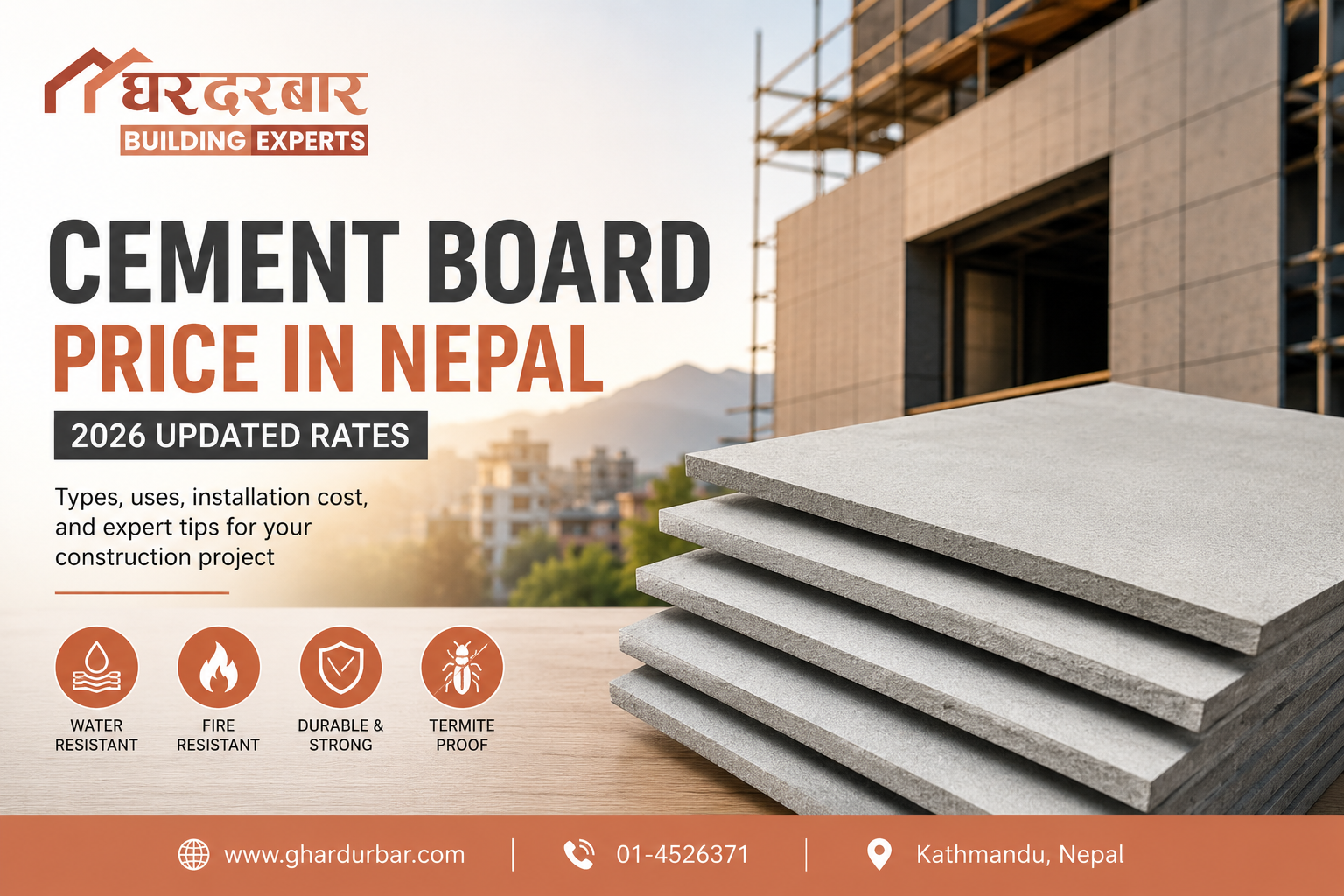
Cement board has quietly become one of the most widely used construction materials in Nepal over the last few years. From cozy homes in Lalitpur to commercial towers in Kathmandu's Putalisadak, cement boards are showing up everywhere. And for good reason. But before you get on the phone with your contractor and just say "whatever the market rate is," let's walk through the real cement board price in Nepal with context.
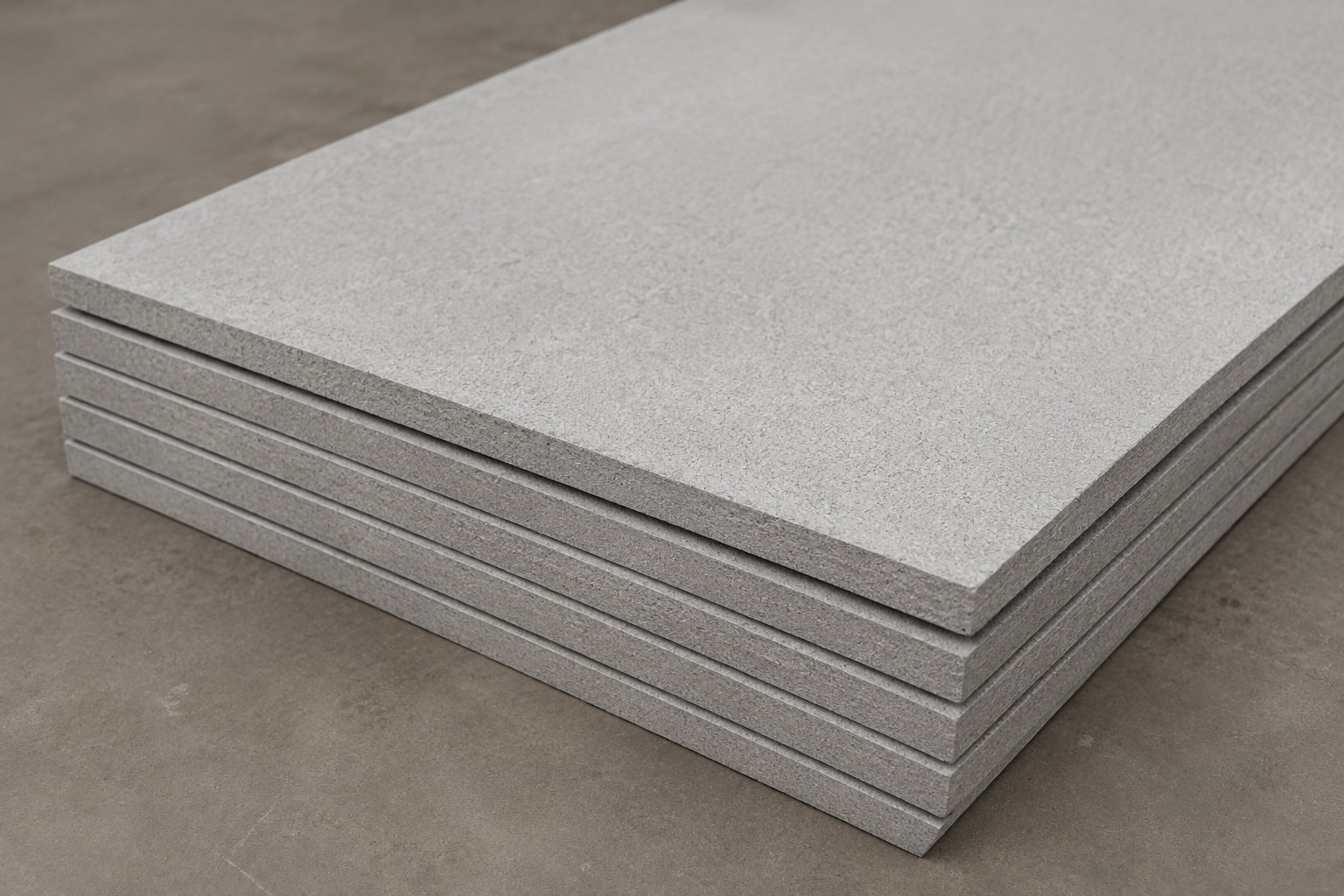
Let's not assume everyone already knows this.
A cement board is essentially a panel made from a mixture of cement, silica, and cellulose (plant-based) fibers. The result is a flat, rigid board that is strong, water-resistant, fire-resistant, and extremely durable. Unlike plywood, it won't rot. Unlike gypsum board, it won't sag or crumble when it gets wet. And unlike wood, termites won't touch it.
It comes in different thicknesses from thin 4mm sheets used for false ceilings all the way to heavy 16mm boards used for flooring and exterior walls in high-rise buildings. Some cement boards have a plain finish; others are textured to look like wood, stone, or brick.
The short version: cement board is built to last, and Nepali builders are finally catching on. That is one major reason why searches for cement board price in Nepal have increased significantly among homeowners, architects, and contractors.
Let's get into what you actually came here for. Below are the current market rates for cement board across Nepal. These prices have been compiled from suppliers in Kathmandu, Pokhara, Biratnagar, and Butwal, so they reflect a realistic national average.
Keep in mind that prices can vary slightly based on your location, the brand you choose, and whether you're buying retail or in bulk. If you're actively comparing cement board price in Nepal, this table gives you a practical estimate of current market conditions.
| Type & Thickness | Approx. Price in Nepal | Where It's Typically Used |
| 4mm Plain Cement Board | NPR 30 – 32 per sq. ft. | False ceilings, lightweight interior panels |
| 6mm Cement Board | NPR 36 – 40 per sq. ft. | Ceiling panels, dry walls |
| 8mm Cement Board | NPR 45 – 50 per sq. ft. | Internal walls, office partitions |
| 10mm Cement Board | NPR 15,000 – 16,000 per unit | Flooring base, exterior walls |
| 12mm Cement Board | NPR 4,800 – 5,200 per sheet | Heavy-duty partitions, wet areas |
| 16mm Cement Board | NPR 6,500 – 7,000 per sheet | Strong flooring, high-rise projects |
| Designer / Texture Cement Board | NPR 70 – 120 per sq. ft. | Decorative feature walls, modern interiors |
| Fiber Cement Board (Premium) | NPR 80 – 150 per sq. ft. | Facades, high-end finishes |
Note: These are approximate market rates as of 2026. Final prices depend on brand, quantity, transport costs, and regional availability. The overall cement board price in Nepal can fluctuate depending on seasonal demand and logistics.
If you've already visited two or three hardware shops and gotten different quotes, don't panic that's completely normal. Here's why the numbers vary so much when comparing cement board price in Nepal across different cities and suppliers.
Plain cement boards are the most affordable. Fiber cement boards which mix cellulose fibers into the cement for extra strength and weather resistance are a tier above. Then there are designer cement boards with surface textures, which are significantly more expensive but give you a premium look for exterior facades or statement walls. Naturally, the premium quality and finish influence the overall cement board price in Nepal.
Some of the cement boards sold in Nepal are imported from India, China, or Thailand. Popular brands you'll find here include Shera, Kalsi, Prima, Everest, and Duragreen. Imported brands tend to cost more due to transportation and customs duties, but they generally offer more consistent quality. Local suppliers have more affordable options too, though quality can vary always check for certifications before buying. If you're serious about comparing cement board price in Nepal, always compare the brand alongside the thickness and specifications.
Nepal's peak construction seasons run from roughly March to June and September to November. During these months, demand spikes and prices can creep upward. If you can plan your procurement before the season starts, you'll likely save some money. If you can plan your procurement before the season starts, you'll likely save some money on your overall cement board price in Nepal budget.
The cement board itself is only part of your budget. Installation is another cost that many homeowners overlook until they're deep into the project.
In Nepal, the installation rate for cement board that is, putting the board in place, screwing it down, and finishing the joints typically ranges from NPR 150 to NPR 485 per square foot, depending on the complexity of the job and the contractor's rate.
This includes:
When calculating the real cement board price in Nepal, installation charges should always be included in your planning. Always get a few quotes from contractors and make sure the scope of work is clearly written down before work begins.
If you're planning a false ceiling or interior partition, your contractor has probably mentioned gypsum board as an alternative. So which one should you choose?
Here's an honest comparison:
Gypsum Board is lighter, easier to install, and cheaper upfront. It works beautifully for interior ceilings and walls in dry areas. But and this is a big but it does not handle moisture well. In Nepal's humid climate, especially in kitchens, bathrooms, or ground-floor spaces near moisture, gypsum board can sag, crack, or deteriorate over time.
Cement Board costs more initially, but it is water-resistant, fire-resistant, and much more durable. In wet areas, it's not just the better choice it's really the only sensible choice.
Our general rule: use gypsum board for dry interior areas where moisture is never an issue. Use cement board everywhere else, especially in bathrooms, kitchens, basements, and exteriors. For homeowners prioritizing long-term durability over short-term savings, the slightly higher cement board price in Nepal is usually justified.
A few years ago, cement board in Nepal was mostly seen in large commercial or institutional construction projects. Today, you'll find it in:
The growing appetite for modern, low-maintenance homes in Kathmandu's new colonies and Pokhara's expanding residential areas has pushed cement board into the mainstream. This rising demand is also influencing the overall cement board price in Nepal year after year.
A few things we'd suggest based on what we see in the market:
Here's our honest take: yes, in most cases.
Cement board is not the cheapest material on the shelf. But when you factor in its lifespan, its resistance to moisture and fire, the minimal maintenance it requires over years and decades, and the fact that you won't be tearing out a damaged ceiling or rotting partition wall five years from now it starts to look like very good value.
For wet areas, exterior applications, and anywhere in Nepal where the climate or humidity poses a challenge, cement board is not just a good option. It's simply the right one. In the long run, the overall cement board price in Nepal becomes a smart investment rather than an expense.
The average cement board price in Nepal in 2026 ranges from around NPR 30–32 per sq. ft. for basic 4mm boards to NPR 6,500–7,000 per sheet for heavy-duty 16mm boards. Designer and premium fiber cement boards can cost even more depending on finish, brand, and application.
It depends on the application.
Yes, especially in humid or wet areas. Cement board is more water-resistant, fire-resistant, and durable than gypsum board, making it a better long-term option for kitchens, bathrooms, basements, and exterior walls in Nepal’s climate. Gypsum board is still suitable for dry interior ceilings and partitions where moisture is not a concern.
Installation costs generally range between NPR 150 and NPR 485 per square foot depending on the complexity of the project, labor rates, framing requirements, and finishing work. This usually includes fixing the boards, joint finishing, and preparing the surface for paint or tiles.
Before purchasing, always check:
Cement board prices in Nepal in 2026 range from as little as NPR 30 per square foot for basic 4mm boards all the way to NPR 7,000 per sheet for heavy-duty 16mm panels, with designer and fiber cement boards going higher. There's no single cement board price in Nepal it depends on what you need, where you're buying, and when. The best thing you can do is go into the market knowing what thickness and type you need, compare a few suppliers, verify quality certifications, and plan your purchase timing wisely.
If you have any questions about cement board for your specific project whether it's a home renovation in Kathmandu or a new construction anywhere in Nepal feel free to reach out to the GharDurbar team. Our engineers and architects are always happy to help you make the right call.
Have questions about materials, construction costs, or planning your home in Nepal? Explore more on GharDurbar.com or reach us directly through our Inquiry Form.